

Cities of Meaning
Written by Kathryn Howell, Executive Director of the National Center for Smart Growth and Associate Professor of Urban and Regional Studies and Planning at the University of Maryland, and Meghan Gough, Associate Professor of Urban and Regional Studies and Planning at Virginia Commonwealth University.
In February 2020, a proposal for redevelopment in downtown Richmond, Virginia died with a vote of the city council. The Navy Hill proposal, which took the name of a neighborhood destroyed through mid-century urban renewal and highway projects after decades of devaluation, included minimal affordable housing and an 80-block tax increment finance (TIF) district. It also originated from a closed-door process. But, what ultimately led to its demise were several threads of resistance that resurfaced together to challenge the Navy Hill proposal, including advocates for cultural heritage preservation, smart growth, housing, and public education. These threads had grown from previous resistance in the Shockoe Bottom neighborhood in Richmond, where a move to develop a ballpark threatened to further the erasure of the neighborhood’s history of slave trade and bondage. Community advocates resisted the effort by the Mayor and developers to create a blank slate onto which new development could be installed. They argued, through their resistance, that the histories and meanings defined both the places for community members and racialized power in the city.
In urban planning practice, history often takes a contextual role – a critical part of front matter to a plan – but, at best, it is where we draw inspiration for commemorative markers or public art. In other cases, it is used as branding – a way of creating an identity for people who may or may not still inhabit the places being planned. But often it merely provides interesting texture to a plan. In Cities of Meaning: Understanding Cultural Landscapes as a Planning Agenda in Richmond, VA, a new article from the Journal of Planning Education & Research, NCSG Director Kathryn Howell and Virginia Commonwealth University Associate Professor Meghan Gough examine two cases of failed redevelopment proposals in Richmond to argue that cultural landscapes — or the layered and relational histories, identities and meanings embedded in places — should be understood in planning as a mechanism for setting an agenda of who, how, and to what end we engage in a place.
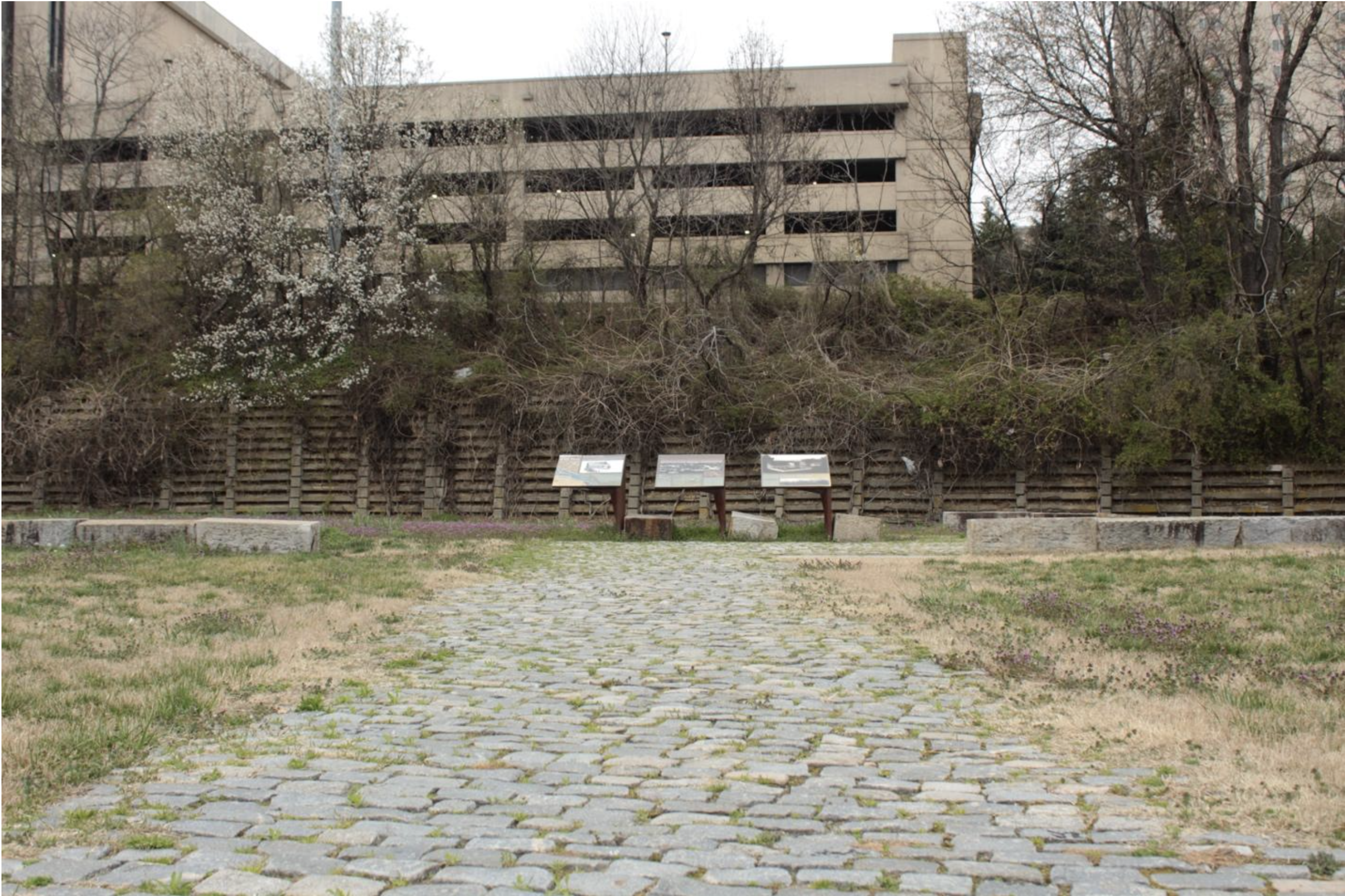
Image of the Lumpkins Jail site in Shockoe Bottom where enslaved people were held before being sold at one of the many auction sites throughout the neighborhood.
Specifically, cultural landscapes can offer insights into the meanings of places that drive both the people who are at the table, the way they are engaged in the process and the outcomes that are acceptable. Planners have to move beyond the archives in telling the stories of place as a way of directing signage and existing conditions and understand that the meanings of place are a critical part of the planning project. While this is part of historic preservation practice, it is rarely part of the process or outcomes of planning for redevelopment. This exclusion is particularly noted in places where the meanings have been obfuscated through demolition, dispossession, displacement and narrative contestation over time. In Richmond, Virginia, the meanings of Shockoe Bottom and Navy Hill were hidden literally under the detritus of rounds of demolition, highway construction, and redevelopment. However, they were not forgotten. Their emergence is ultimately changing the way the city thinks about these places and the city as a whole.
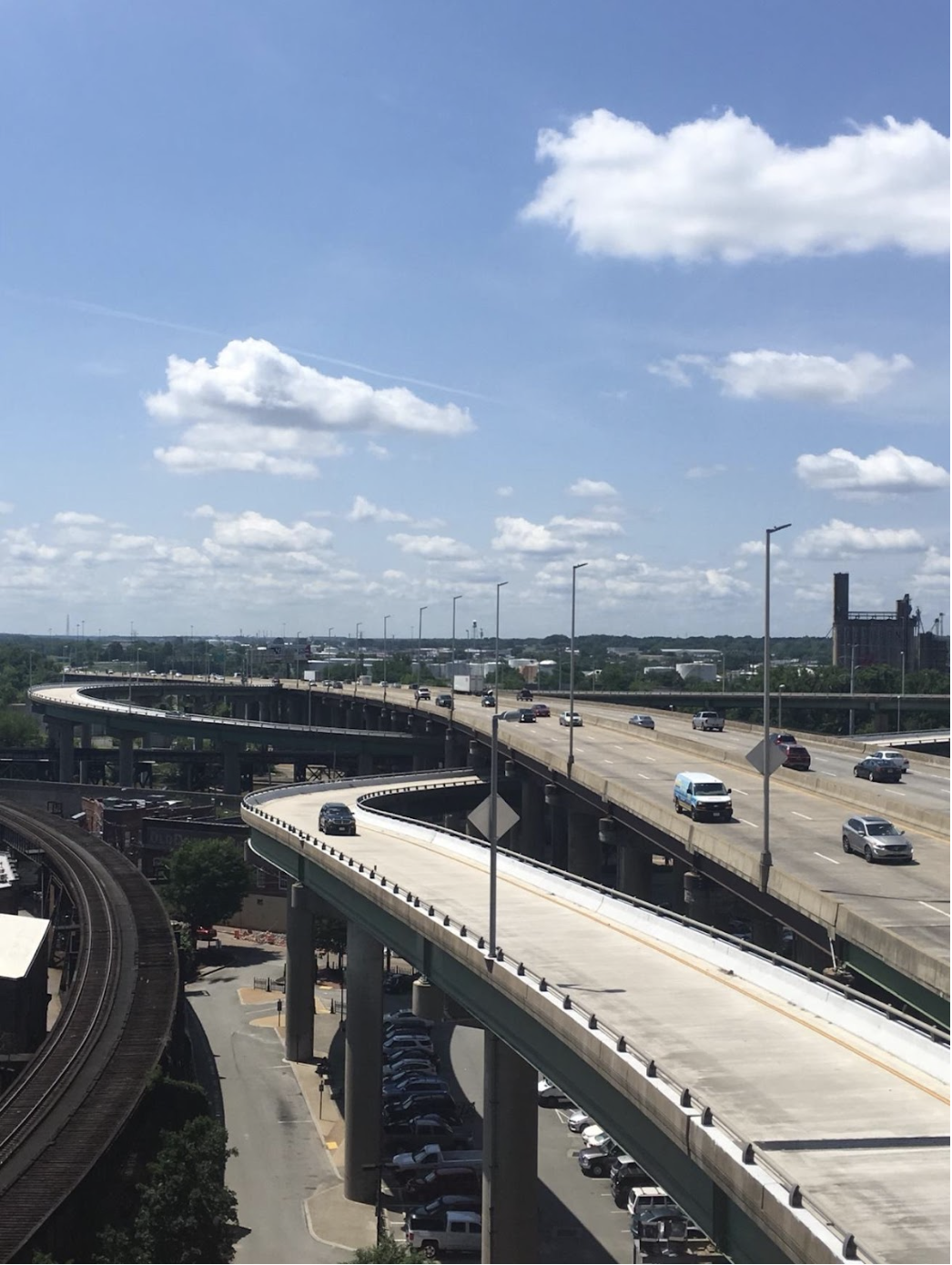
Image of Interstate 95, which both destroyed historic sites and Black homes and separated Shockoe Bottom from downtown in the mid-20th Century.