|
China Land Policy Program |
 |
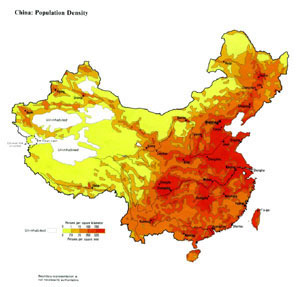
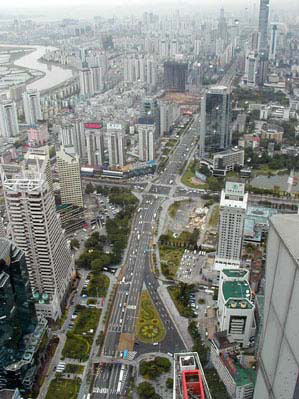
The National Center for Smart Growth Research and Education has broadened its research and training agenda by creating an international urban development component that, at present, is heavily focused on the effects of the massive urbanization process now underway in China.
The mission of this program is to help the Chinese government better understand issues related to urban and land policy, taxation and to assist the Chinese in policy making in these areas.
The China Land Policy and Urban Management Program is co-sponsored by the Lincoln Institute of Land Policy and the National Center for Smart Growth, University of Maryland.
It also is an arm of the Lincoln Institute's China Program.
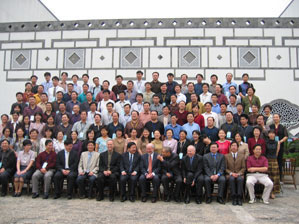
Activities of the Program include training for Chinese scholars and officials both in China and in the United States; research; the convening of conferences, workshops, symposia, and roundtable discussions; production of publications; exchanges of scholars; and demonstration projects in China.
The Program is directed Dr. Chengri Ding, Associate Professor at the University of Maryland, who joined the National Center for Smart Growth staff in August 2003 from Texas A&M University.
China Program Report 2006 (English) is available here.
For Chinese version, please click here.

Lincoln Institute Mission
The China Land Policy program was established in 2003 to extend the Lincoln Institute’s international focus.
The following objectives of the Lincoln Institute have guided the activities of the China Program:
- To provide public officials, other professionals and citizens who are engaged in land and tax policy with information and conceptual and analytical tools needed for better decision-making.
- To support needed research in areas of our concern to improve understanding.
- To promote and demonstrate more effective, fair and efficient methods for accomplishing public and private goals in our areas of concern.
- To advance understanding and development of new methods that can be used by the public and private sectors to improve land and land tax policy.
- To facilitate communication and interchange among and between academics, policy makers, practitioners and citizens.
- To encourage new scholars and scholarship in our areas of concern.
- To develop training and other educational materials that can be used in Lincoln’s training programs and the educational programs of other organizations.
- To assure that we have identified all of the relevant audiences for the work of the Institute and that we are using the most effective way of reaching the audiences, including, as appropriate, Internet, film and audio training.