
2025 Maryland Commuter Survey
Written by Alex McRoberts and Chester Harvey, Transportation Policy Research Group
Introduction
The Maryland Commuter Survey provides an annual snapshot of how Maryland residents travel to work and how broader transportation, work, and lifestyle factors shape commuting behavior across the state. Conducted by the National Center for Smart Growth (NCSG) in partnership with the Maryland Department of Transportation (MDOT), the survey helps track transportation system performance and inform planning and policy decisions.
The 2025 survey was collected in May and June from 943 adult workers living in Maryland. Now in its fourth consecutive year, the survey allows us to compare commuting patterns between 2022 and 2025, a period shaped by the long-term effects of the COVID-19 pandemic, changing work arrangements, and evolving transportation needs.
The 2025 results suggest that Maryland’s commute patterns have become more consistent in recent years. Statewide averages point to a post-pandemic pattern that has changed less sharply in recent years, though workers’ experiences continue to differ by geography, commute mode, work arrangement, and access to reliable transportation.
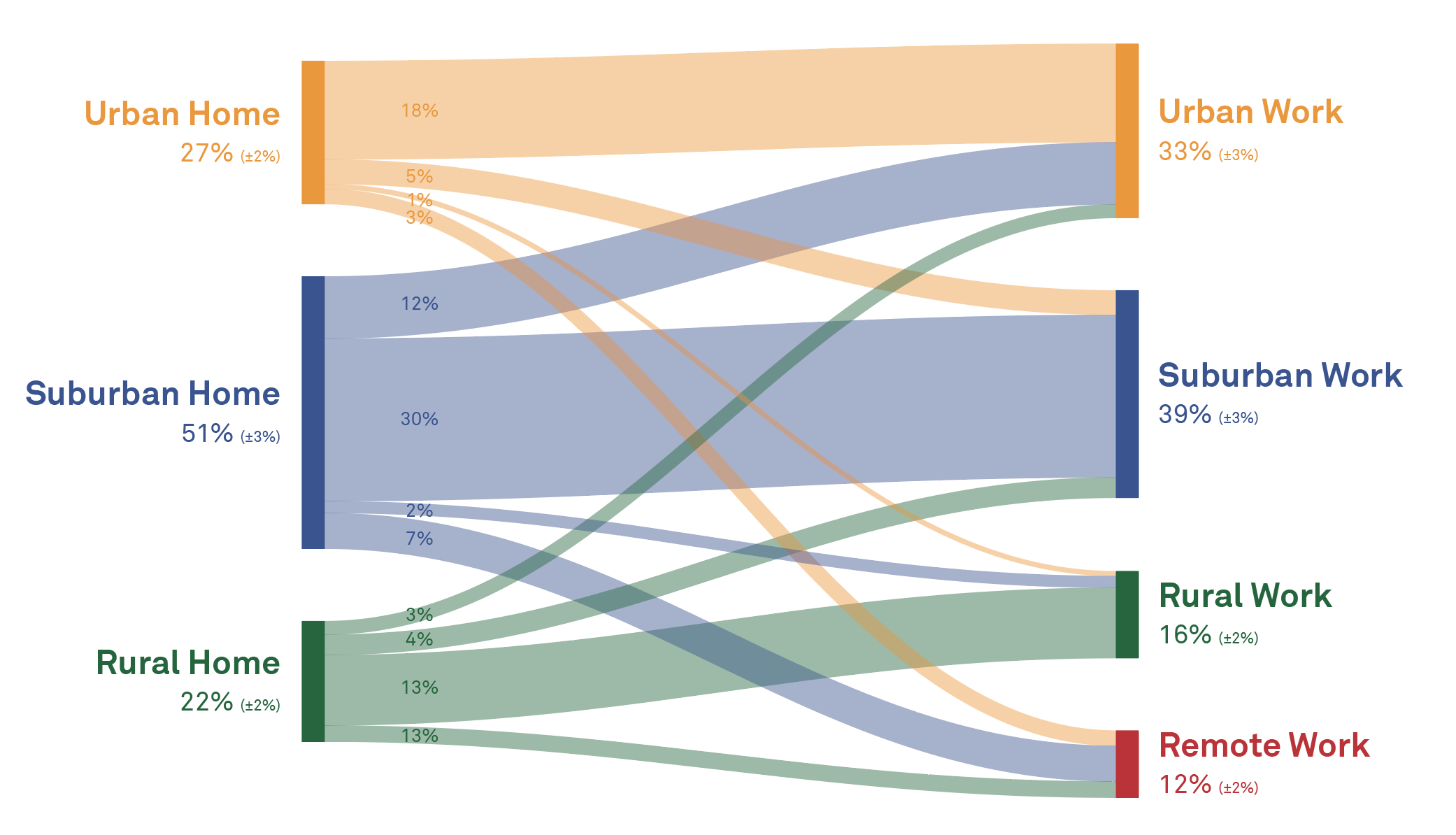
Figure 1. Shares of workers commuting from urban, suburban, and rural home locations to urban, suburban, rural, or remote work locations. Hybrid workers are included in the geographic work locations where they physically commute, while fully remote workers are shown as remote.
How The Survey Was Conducted
The 2025 Maryland Commuter Survey was administered online by Qualtrics Research Services to 943 adult workers living in Maryland. The survey was designed to represent Maryland’s resident workforce overall, rather than provide precise estimates for workers in each county individually.
To improve representativeness, we used quota sampling during data collection and applied statistical weights after the survey was completed. Quotas were based on key demographic characteristics, including gender, age, race and ethnicity, and whether respondents lived in urban or rural counties. Final results were also weighted by age, race and ethnicity, and urban-rural residence so statewide findings better reflected Maryland’s adult worker population.
Respondents answered questions about employment, workplace location, commute behavior, transportation resources, preferences, and perceptions. The survey also included a retrospective travel diary, asking workers which days they worked during the previous calendar week and how they traveled to work on those days. Approximate home and work locations were collected through an interactive map interface, and survey responses were supplemented with estimated commute distances and travel times.

Figure 2. Weighting Diagram
What We Found
Commute mode shares have remained relatively stable.
In 2025, automobiles remained the dominant commute mode in Maryland, accounting for 71% of commute trips. Transit accounted for 10% of trips, active transportation accounted for 3%, and telecommuting accounted for 16% of potential commute trips that might otherwise have involved physical travel.
Mode shares fluctuated somewhat between 2023 and 2025, but the changes did not point to a clear trend toward increasing or decreasing use of any particular mode. These patterns suggest that Maryland commuting may have reached a relatively stable post-pandemic pattern by 2023, rather than continuing to shift sharply year to year.
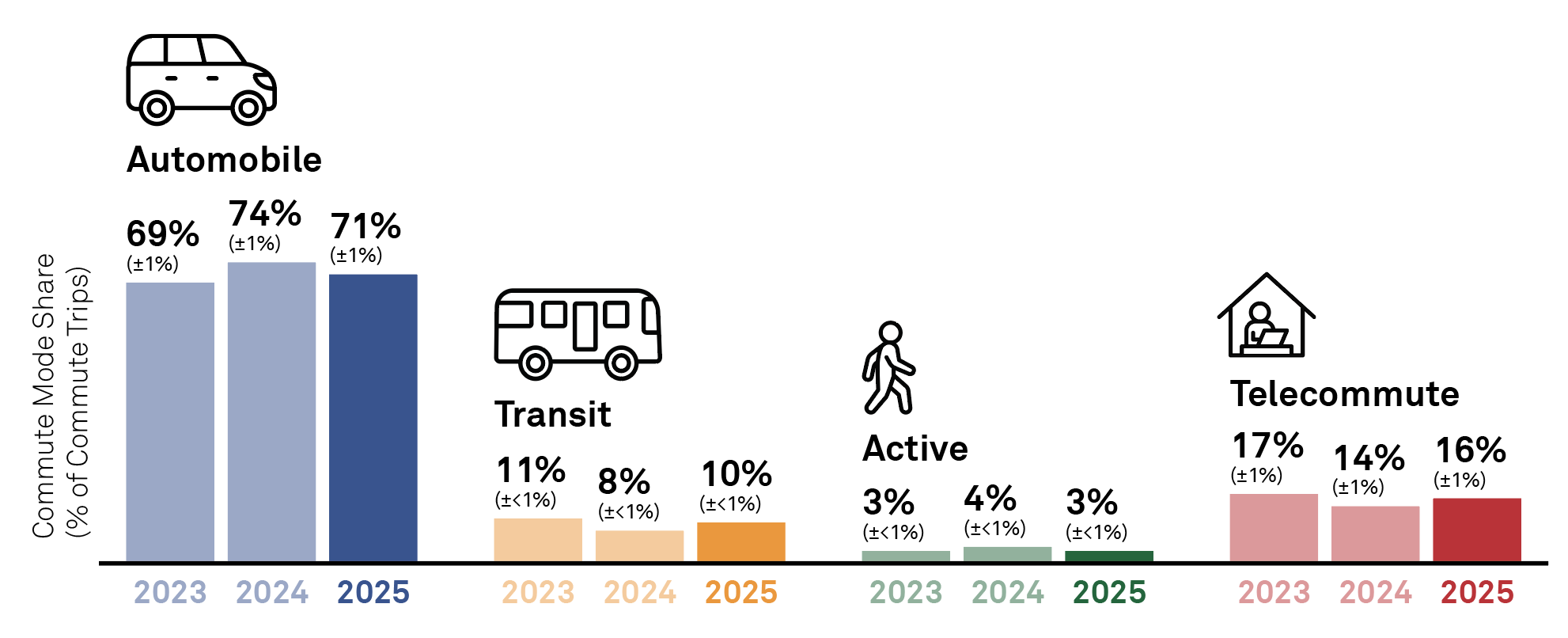
Figure 3. Shares of commute trips by automobile, transit, active, and telecommute in 2023, 2024, and 2025. Margins of error are calculated with 90% confidence.
Commute timing remained concentrated in peak periods.
Despite changes in work location and commute frequency, commute timing remains strongly shaped by traditional peak periods. Approximately two-thirds of physical commute trips began during morning or afternoon peak hours, while about one-third occurred outside peak periods. Fifteen percent of trips began overnight, and 10% began during the middle of the day.
Between 2023 and 2025, the share of reported commute trips beginning in the afternoon increased by 15%, suggesting that afternoon peak-period travel may be becoming somewhat more concentrated than it was earlier in the post-pandemic period. Peak-period travel therefore remains important for transportation planning, even as hybrid work and nontraditional schedules persist.

Figure 4. Shares of physical (non-telework) commute trips in each survey year that began in early morning (12:00 am–5:59 am), morning (6:00 am–9:59 am), midday (10:00 am–1:59 pm), afternoon (2:00 pm–5:59 pm), evening (6:00 pm–8:59 pm), and late night (9:00 pm–11:59 pm) hours. Line colors indicate years. Trips both to work and from work are included. Margins of error are calculated with 90% confidence.
Many workers do not commute to the same place every day.
The survey also shows that commuting cannot always be understood as a daily trip from home to a fixed workplace. In 2025, workers’ home and work locations were distributed across urban, suburban, and rural settings. However, only 52% of workers reported commuting to a consistent location every day they worked. The remaining 48% followed more variable patterns. Some changed job sites, some commuted before traveling elsewhere for work, and others traveled directly from home to different work locations.
This matters because many transportation planning tools and programs are still organized around a relatively consistent home-to-work commute, even though work-related travel is more variable for many Maryland workers.
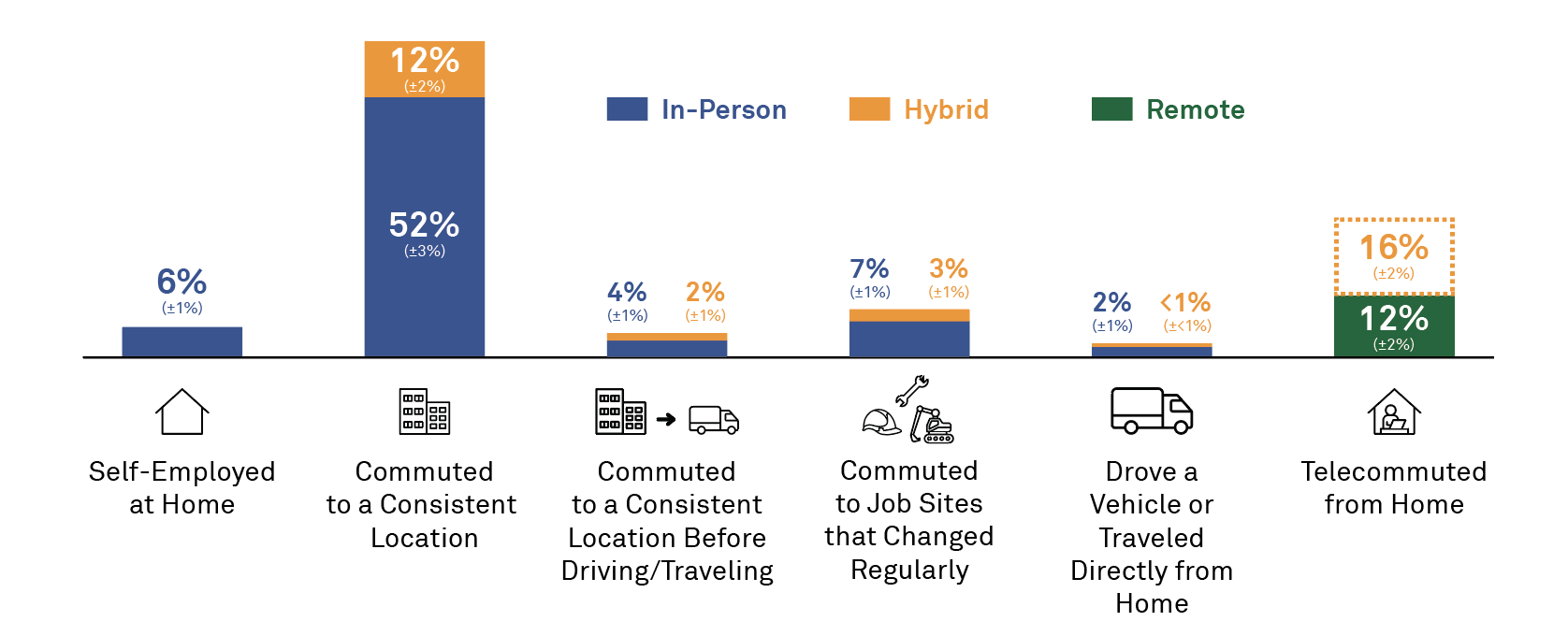
Figure 5. Share of workers by work and commute pattern.
Average commute time remains steady, but varies by commute mode.
The average one-way commute time in 2025 was 29 minutes, statistically unchanged from recent years. Straight-line commute distance averaged 12 miles, also remaining stable within margins of error.
Commute times varied by mode and geography. Transit commuters averaged 33 minutes, compared with 25 minutes for automobile commuters and 13 minutes for active commuters. Metropolitan regions tended to have longer travel times despite shorter commute distances, while more rural regions had longer distances but higher average speeds.
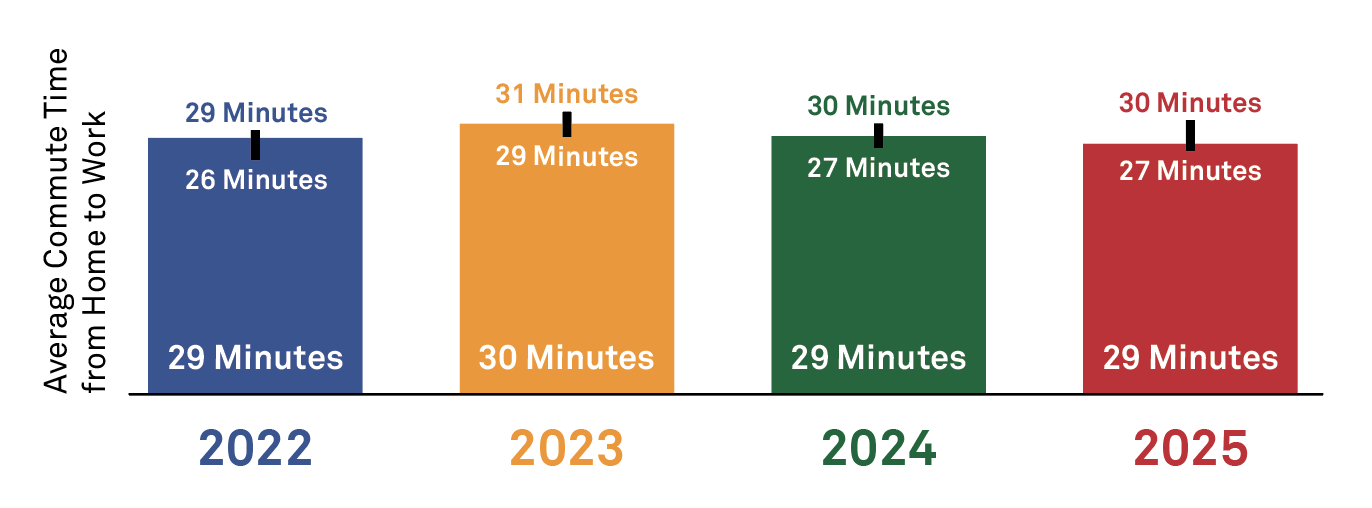
Figure 6. Average commute times from home to work by year. Workers who were fully remote and self-employed at home were excluded. Labeled ranges and error bars show 90% confidence intervals.
Satisfaction is high, but transportation challenges remain.
Overall satisfaction with Maryland transportation services remained high. In 2025, 83% of workers reported being satisfied with MDOT services, including 32% who were very satisfied and 51% who were somewhat satisfied.
Sixty-two percent of workers agreed that public transit could take them where they wanted to go, and 65% agreed that they were satisfied with the transportation options available to them. However, about one in five workers disagreed with these statements. This suggests that while satisfaction is generally strong, not all workers feel well served by the transportation options available to them.
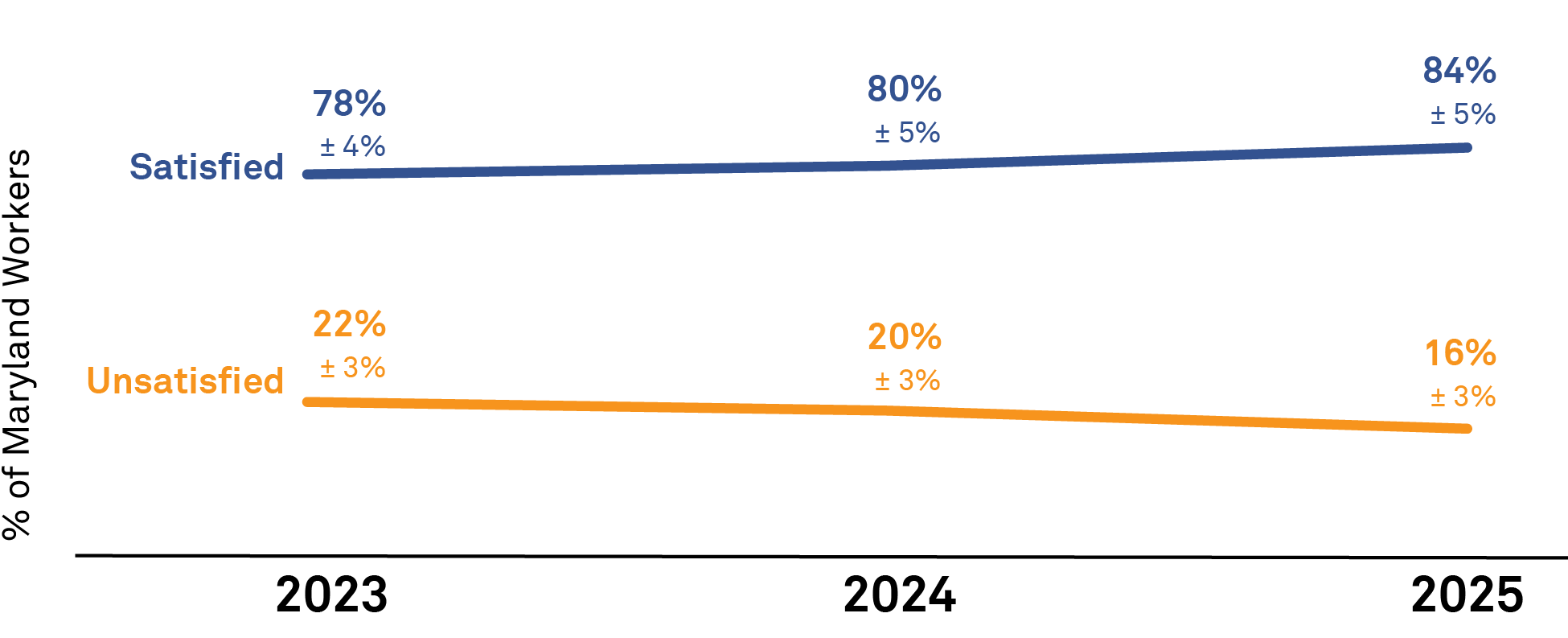
Figure 7. Shares of Maryland resident workers who reported being satisfied, including very satisfied and somewhat satisfied, or unsatisfied, including very unsatisfied and somewhat unsatisfied, with transportation services provided by MDOT over three MCS years.
Transportation insecurity remains unevenly distributed.
Most Maryland workers did not report recent transportation disruptions, but 34% experienced at least some transportation-related lateness in the past 30 days, and 10% reported being late often. Transportation insecurity, measured using the Transportation Security Index, varied modestly by geography but more sharply by race, disability status, and commute mode.
Forty percent of workers identifying as people of color were transportation insecure, compared with 30% of white workers. Forty-five percent of workers with disabilities were transportation insecure, compared with 33% of workers without disabilities.
Differences were especially visible by commute mode. Fifty-nine percent of transit commuters and 49% of carpoolers were classified as transportation insecure, compared with 31% of solo drivers and 29% of exclusive teleworkers. These findings suggest that reliability-related transportation challenges are unevenly distributed and may not be fully captured by general satisfaction measures.
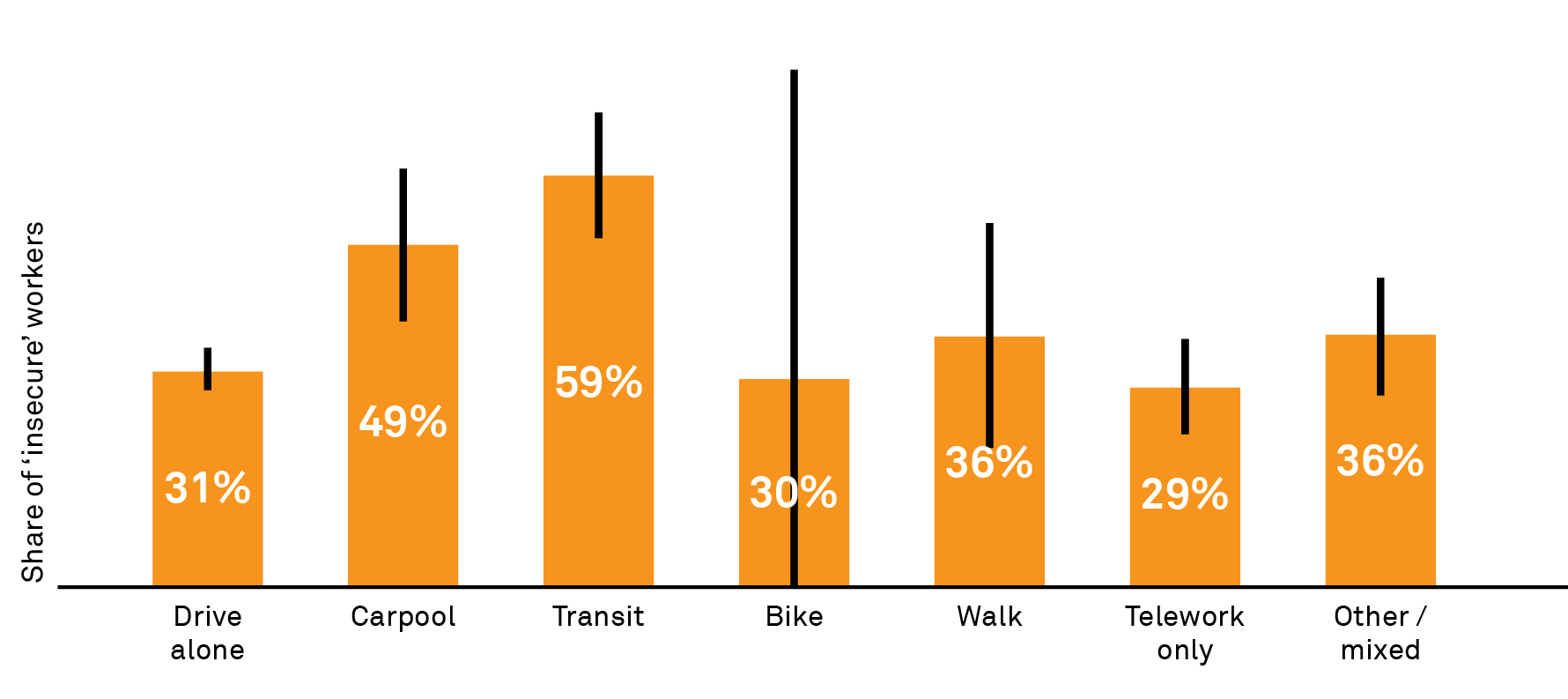
Figure 8. Shares of transportation insecure workers by primary transportation mode used for commuting. Error bars show 90% confidence intervals. The large confidence interval for bike commuters reflects the small sample of workers who commuted by this mode.
Tracking Maryland’s Changing Commute
The 2025 Maryland Commuter Survey points to a statewide commute pattern that has become more consistent in recent years, while remaining highly varied across workers and regions. Telecommuting continues to displace some physical commute trips, many workers do not travel to a fixed workplace every day, and commute mode, timing, distance, and reliability continue to differ across Maryland’s workforce.
Looking ahead, the 2026 Maryland Commuter Survey will build on these findings by asking more directly about commute preferences, awareness of transportation options, and factors that might encourage workers to consider different ways of getting to work. As the survey enters its fifth year, it will continue to help MDOT and NCSG track changing commute patterns and identify where transportation improvements can support workers across the state.