Accomodations and the area
| Ariston Hotel |
|---|
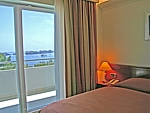
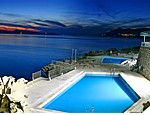 Hotel Ariston is the largest of the hotels at Importanne Resort Dubrovnik. The newly-renovated luxury rooms are large in size and very comfortable. Most of the rooms have a view of the Adriatic Sea and the nearby Dubrovnik islands. Every room is air-conditioned and has a comfortable double bed or 2 twin beds, bathtub with shower in a spacious washroom and a LCD television (free high-speed internet is available in each room). There are two sea-water swimming pools on the sun bathing area which is developed along the rock face below the hotel complex. It is also possible to swim in the sea via many entry points along the base of the rock face. Hotel Ariston is the largest of the hotels at Importanne Resort Dubrovnik. The newly-renovated luxury rooms are large in size and very comfortable. Most of the rooms have a view of the Adriatic Sea and the nearby Dubrovnik islands. Every room is air-conditioned and has a comfortable double bed or 2 twin beds, bathtub with shower in a spacious washroom and a LCD television (free high-speed internet is available in each room). There are two sea-water swimming pools on the sun bathing area which is developed along the rock face below the hotel complex. It is also possible to swim in the sea via many entry points along the base of the rock face.
Hotel is located in Babin Kuk which is close to Lapad on the north western side of Dubrovnik. Babin Kuk is a quiet area with a few large hotels and a shopping centre which includes a few bars and restaurants. It is however only 15 minutes walk down a coastal path to Lapad where there is much more life. It is also only 20 minutes from Dubrovnik old town via the number 6 bus which stops just behind the hotel and costs 8kn each way (just over €1). The bus drops you off by the town gate Pile. Please take a look at the link city map link on the bottom of the page for better reference. Hotel link: Ariston Hotel |
| About Dubrovik |
The world has recognized Dubrovnik as the town of exceptional cultural and historical monuments, so that UNESCO has declared the whole old town nucleus as the protected world heritage.
Due to its beauties and extensive tourist offer, Dubrovnik is one of the most attractive destinations on the Mediterranean.
It is generally known that the city of Dubrovnik is one of the international jet set destinations; however it is only one of many beautiful destinations in Croatia.
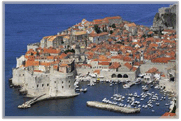 Destination Dubrovnik - City, port and tourist center of southern Dalmatia, located at the foot of Srd Mountain. It has a rich political and cultural history, and has been placed on the UNESCO World Heritage List. Due to its beauties and extensive tourist offer, Dubrovnik is one of the most attractive destinations on the Mediterranean. Tourists visit Dubrovnik throughout the whole year. Tourism started to develop before WWI. Besides world-renown monument heritage, the area has beautiful rocky, concrete, pebble and sandy beaches, as well as Mediterranean climate and vegetation. It is also known as the city of hotels and restaurants. Its offer includes various types of accommodation facilities (hotels apartments, rooms, camping sites), extensive selection of first class restaurants, numerous sports and recreational activities, as well as cultural and entertainment events. The gastronomic offer encompasses Croatian and international cuisine. The economy is based on tourism and maritime activities. Destination Dubrovnik - City, port and tourist center of southern Dalmatia, located at the foot of Srd Mountain. It has a rich political and cultural history, and has been placed on the UNESCO World Heritage List. Due to its beauties and extensive tourist offer, Dubrovnik is one of the most attractive destinations on the Mediterranean. Tourists visit Dubrovnik throughout the whole year. Tourism started to develop before WWI. Besides world-renown monument heritage, the area has beautiful rocky, concrete, pebble and sandy beaches, as well as Mediterranean climate and vegetation. It is also known as the city of hotels and restaurants. Its offer includes various types of accommodation facilities (hotels apartments, rooms, camping sites), extensive selection of first class restaurants, numerous sports and recreational activities, as well as cultural and entertainment events. The gastronomic offer encompasses Croatian and international cuisine. The economy is based on tourism and maritime activities.
|
| Arriving by Plane |
Dubrovnik International Airport
Tel. ++385 20 773 377 |
| Credit Cards, Shopping |
| Foreigners can claim a sales tax refund within one year for purchased goods. Don’t forget to ask the salesman to fill out the tax refund form when purchasing goods. All major credit cards are normally accepted throughout Croatia, as advertised at points of sale, such as: American Express, Diners Club, Euro card/Master Card, Visa, JCB, and Euro cheques. Traveler’s Checks are also accepted. |
| Currency |
| The Croatian currency is the Croatian Kuna (abbreviation KN, international abbreviation HRK). The Kuna consists of 100 lipa (lp). Foreign currency can be exchanged for local money at banks, post offices and exchange offices, according to the valid rates of exchange. |
| What to see |
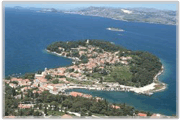 Cavtat -- Cavtat, the ancient Epidaurum, and the forerunner of Dubrovnik, is a small medieval town built on the southern slopes of the peninsula of Rat in accordance with urban development plan. Places like Cavtat offering so much to the visitors are quite rare. lt's scenery, the rich cultural and historical heritage along with the range of services offered to tourists meet the demands of the present day tourists, thus making it one of the most attractive destinations on the Adriatic coast. Cavtat is located between the magic city of Dubrovnik on one side and beautiful Konavle on the other. There one can still feel the spirit of the past time and experience the centuries old tradition of our ancestors. It is an ideal holiday resort. Each visitor can discover his own wishes, enjoy the hidden coves at peace, long walks at the seaside or spend active holidays going in for recreational sports and entertaining cultural programs. Cavtat offers accommodation in the quality hotels, in the family apartment houses or bed & breakfast places. lt’s numerous restaurants serve a gastronomic selection of local and traditional cuisine. Apart from sporting and recreational activities for an active holiday such as tennis, fitness, scuba diving school, aquatic sports, mountain pathways and 5 km long walkways along the sea, Cavtat offers a variety of excursion programs revealing centuries-old, harmonious lifestyle traditions of people of Konavle and awakening the very adventurous spirit you ask for. Along with the rich cultural heritage which should be by all means seen (the Bukovac art gallery, the Bogisié's collection, and the Racié mousoleum by Ivan Mestrovié), there are many cultural and entertainment programs held all the year round. Cavtat is one of the best known Croatian carnival venues, especially during the manifestations "The Cavtat summer". During the summer and the winter carnival it offers its frolicsome soul worth experiencing.
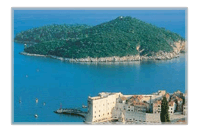
Lopud -- an island of lush Mediterranean and subtropical vegetation, beautiful gardens, parks and beaches, Lopud is one of the most developed islands for tourism in the Dubrovnik region. In the past, it was an island of captains, which provided the most sailors for the navy of the Dubrovnik Republic. Also from Lopud was the famed sailor and ship owner Miho Pracat. According to the Dubrovnik historian Razzi, Lopud had 30 churches in the 16th century, as well as numerous summer residences, several monasteries and many more inhabitants than today. Visible on the island are the ruins of early medieval churches, summer residences and fortresses. The Franciscan monastery from 1483 with its cloister, defensive towers and walls and its Church of St. Mary of Splica holds much valuable art: the polyptych of Pietro de Giovanni, the triptych from the workshop of Nikola Bozidarevic, the polyptych of Girolan da Santacroce, paintings by the Flemish master Bassan and more. The Church of Our Lady of Sunjaiz from the 15th century is a valuable cultural monument and contains paintings by Palma the elder, Natalino da Murano, Mateja Juncic and others. The island has good boat connections with Dubrovnik from Gruz Harbour.
Lokrum
-- The eternally green islet of romantic beauty, right off the
coast of Dubrovnik is a true oasis of peace, and one of the most attractive
excursion sights for residents of Dubrovnik and its visitors. With its
maintained bathing sites and bays, view of the sunny open sea, fragrant sea,
woods of pine, laurel and the lush subtropical vegetation, and with its old
Benedictine monastery and walking trails along the shaded alleys, the islet
gives an unforgettable impression. In the bosom of the fragrant park is the
former Benedictine monastery (from the 12th century), which was closed down
during the time of the Napoleon occupation. Later, the monastery and the islet
as a whole came into the possession of the Habsburg Archduke Maximilian and
became his summer residence in 1859. Maximilian renovated the monastery in the
neo-Gothic style and built a castle in the shape of a tower. Following
Maximilian's tragic death in Mexico, the islet changed hands several times, and
today is a protected nature park. During the French occupation, the French
erected a citadel, called "Fort Royal" at the highest point on the
island, which today is a looking point offering the loveliest view of Lokrum
and the whole of Dubrovnik. A special attraction on Lokrum is its small lake,
called the "dead sea". The castle today is home to the Biological
Institute of the Croatian Academy of Arts and Sciences and the Natural Sciences
Museum, with its valuable collections and memorial collection of world renowned
Dubrovnik mathematician, atomist and astronomer, Ruder Boskovic (18th century).
Transport to Lokrum is organized in tourist boats from the Dubrovnik old town
port. Ploce
-- Ploce (the inside town gate). This east entry to the town
is under protection of St. Blazes, the saint patron of Dubrovnik.
The town gate Pile
-- The west entry to the city. Constructed in the 16th Century.
Minceta Tower
-- The tower Minceta is dominating the city skyline. Several masters, like the famous Florentine builder Michelozzo di Bartolomeo and the local builder of the renaissance, Juraj Dalmatinac, constructed this powerful bastion with over 6 meters tall walls.
Bokar
-- The tower Bokar, constructed in the 15 th century. Famous is the inscription on one tower stone: protects the city gate Pile. (NON BENE PRO TOTO LIBERTAS VENDITUR)
Lovrijenac
--The tower Lovrijenac is situated all alone on a AURO - Freedom cannot be sold for 37-meter high rock any gold of the world.
Bezel
-- The bezel, above the Franciscan church portal, with the Pietá sculpture from the 15 th Century is a work of the brothers Leonard and Petar Petrovic.
St Blazes
-- The main altar in the church of the St. Blazes with its gold-plated statue of St. Blazes holding the town model of Dubrovnik in his hand, dates back to the 15 th century.
Old Library -- The monastic library contains a treasure of books - more than 1200 old scripts, 137 original prints and 7 books with ancient church chorales. Old Rectors room
-- The study room of the principle in the Rector palace with period furniture, images of old masters a numismatic collection, the original key of the city gates, signet, armorial bearing...etc
Old theatre
-- The famous old Theatre in Dubrovnik.
Pharmacy
-- The old Franciscan pharmacy, built within the Franciscan convent in 1317, is still working today. It is regarded as one of the oldest pharmacies in Europe.
City wall
-- On every city gate and on the wall around the old town of Dubrovnik, there is a sculpture of St. Blazes, the saint of the city.
Rectors palace
-- The Rector palace is the most important monument of Old Town Dubrovnik. It served as government building and residence of the principle during his term. The aristocratic and harmonically architecture of the palace shows attributes of the Gothic and Renaissance.
Onofrio fountain
-- The small Onofrio fountain constructed 1438, made by the Neapolitan master Onofrio della Cava.
Cahedral
-- The Cathedral of Dubrovnik was built in the 18. Century by the Italian builder Andrea Buffalini from Urbano.
Sponza palace
-- The Palace Sponza was constructed in the 16. Century, in gothic and renaissance style, by local builder Paskoje Milicevic and the brothers Andrijic from Korcula. At the time of the republic the palace served as Customs Office, the Mint, the Central Bank and the Treasury. The arc of the atrium in the Palace Sponza bears an inscription where the scale was once located: FALLERE NOSTRA VETANT; ET FALLI PONDERA; MEQVE PONDERO CVM MERCES; PONDERAIPSE DEVS : Our scale permits no fraud. When I cradle the ware, God is cradling myself.
Franciscan Convent
-- The Franciscan convent, once the centre of culture and art in Dubrovnik.
Monument of freedom
-- The monument of the freedom poet, Ivan Gundulic, from 1892 crafted by the
Croatian sculptor Ivan Rendic. The pedestal is decorated with a sculpture from the
famous Gundulic epic "Osman".
Orlando Pillar
-- The Orlando pillar is a symbol of Dubrovnik's freedom.
The Gunduliceva Poljana square -- The Gunduliceva Poljana square is surrounded by stone houses and transforms in daytime to a pictorial market place. During the Summer Festival, this square is serving as an open sky stage.
Luza square
-- The Luza square, a unique ambient, surrounded by famous buildings of the city council and churches, a central point of the public life and the centre of most important celebrations in town.
Old Town City Map -- http://www.korculainfo.com/dubrovnik/old-town/map/ http://www.velalukatravel.com/korcula-map/dubrovnik-city-map.html |
 As well as free wired internet connections in rooms there is also two PC’s with internet connection in reception that are free to use.
 |
 |
 |