Maryland DHCD releases NCSG-led Housing Needs Assessment
A new report by the University of Maryland’s National Center for Smart Growth and Enterprise Community Partners finds that affordable housing stock in Maryland has not kept pace with the state’s housing needs, and that state and local leaders must accelerate their efforts to provide a range of rental and for-sale housing options for Maryland’s growing number of residents.
Commissioned by the Maryland Department of Housing and Community Development (MDHCD), the report shows that, despite efforts by the state to create more affordable housing, high construction costs, barriers to development and a lack of public/private investment have led to a deficit of affordable homes in rural and urban areas alike.
Key report findings include:
- A shortage of 85,000 affordable apartments in Maryland for families and individuals earning less than 30% of median income, representing the most serious gap in supply for people at all income levels;
- An additional 97,200 families and individuals earning less than 50% of median income are expected to move to the state by 2030, highlighting the need to dramatically increase affordable housing supply over the next 10 years; and
- People of color, individuals with disabilities and seniors—who represent 14% of all Maryland families—face additional hurdles such as lack of flexible standards used by landlords when screening tenants and requiring high down payments. These disparities have been made worse by the Covid-19 pandemic.
“While the D.C. suburbs and Baltimore and its suburbs face significant shortages, this is really something we’re seeing statewide, from Western Maryland to the Eastern Shore,” says Nicholas Finio, associate director at the National Center for Smart Growth and one of the report’s lead authors.
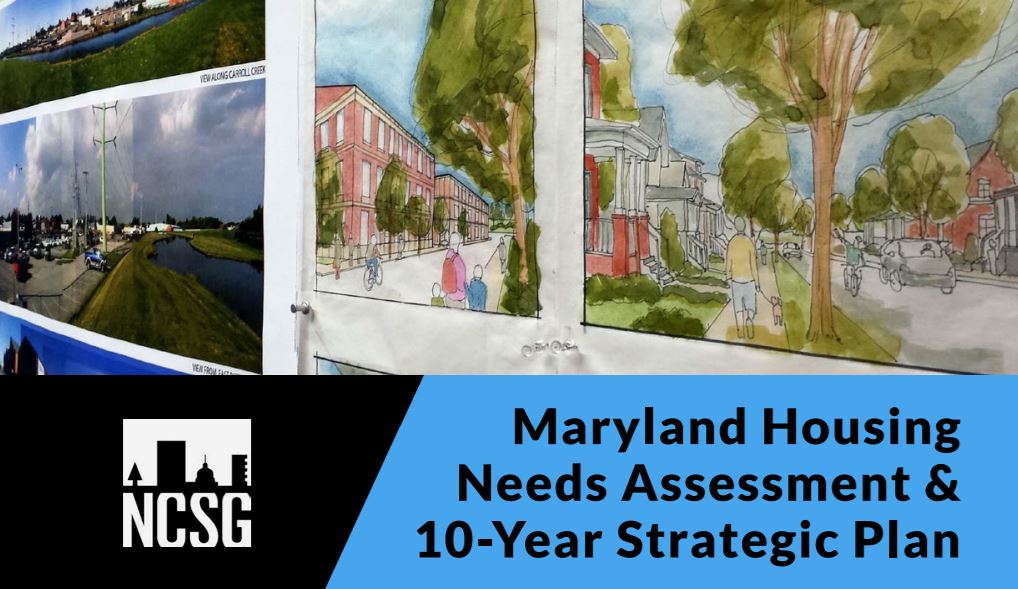
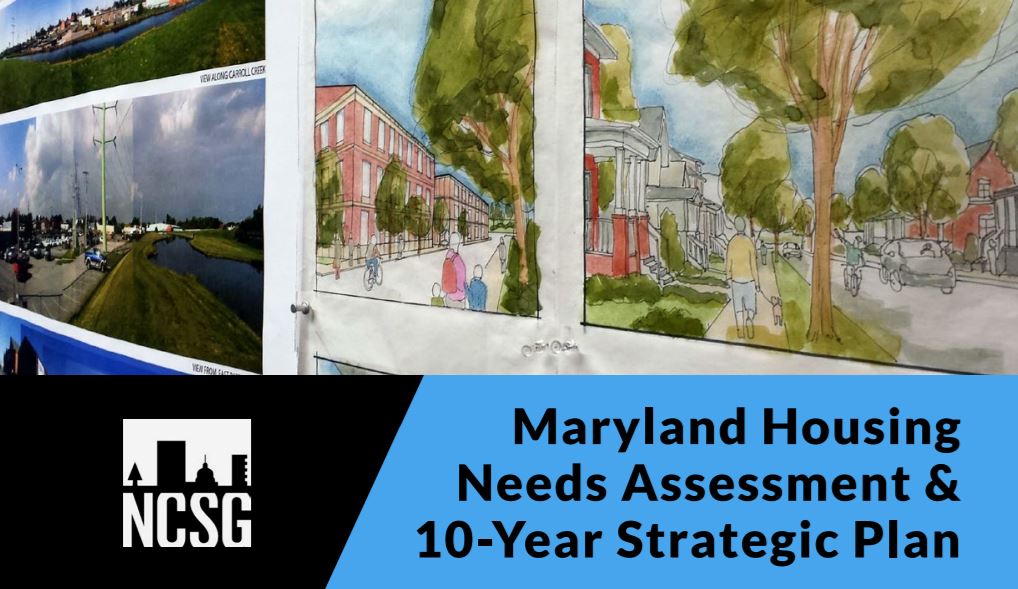
“Maryland Housing Needs Assessment & 10-Year Strategic Plan” outlines the housing needs and obstacles facing Maryland renters and homeowners, and provides a framework to guide state and local governments, housing organizations and partners across Maryland over the next 10 years. It was developed through a comprehensive analysis of current conditions and data projections, and an evaluation of existing housing and development programs available across the state.
The report was commissioned in 2019 in response to a request from the chairs of the Maryland General Assembly’s Senate Budget and Taxation and House Appropriations committees. It was submitted last week by MDHCD to lawmakers.
The analysis points to a shortfall in housing for low and very low-income families and individuals who will make up half of all new Maryland households by 2030. An increase in housing costs relative to sluggish incomes has resulted in a significant financial burden for low-income residents; one-third contribute at least 30% of their household income toward their mortgage or rent payments. The share of both owner and renter households that are severely cost burdened—people who pay 50% or more of their income towards housing—has increased dramatically since the year 2000.
A lack of equitable and affordable housing results in community disinvestment and concentrations of poverty, a problem, the report states, that affects families with children, seniors, people with disabilities and communities of color more than others. Racial inequality in the state is exemplified by homeownership rates. Among Black Marylanders, the homeownership rate is 26 percent lower than that of White households.
“Maryland will need a lot more for-sale and rental homes to serve the needs of a rapidly growing population over the next 10 years,” said Chris Kizzie, VP of Enterprise Advisors, the consulting and technical assistance arm of Enterprise Community Partners. “We know what’s needed to address the shortage: intentional and sustained investment in a range of housing options as well as programs that align with a racially and ethnically diverse state.”
Initiatives that boost opportunities, such as increasing awareness of housing assistance and subsidies for affordable housing developments, the report suggests, are key to achieving more equitable, positive outcomes across the board.
An advisory group of representatives from statewide organizations and local and regional governments helped shape the assessment and propose five statewide priorities: promote equity in housing; create a balanced housing supply; increase access to opportunity; support economic growth; and create content-specific approaches to meet housing needs. The report includes a toolkit with nearly 70 housing-related actions for local and state decision-makers and their partners to meet housing needs over time.
Read the full report here.
Read news coverage on DCist here.