|
China Land Policy Program - Land Issues In China |
 |
Why China? Why Now?
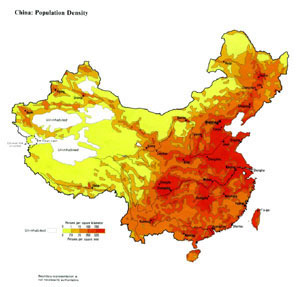
The People’s Republic of China is home to 1.3 billion people, one-fifth of the world’s population.
Despite a strict control on population growth through the “one family, one child policy,?its population grows by 12 million per year.
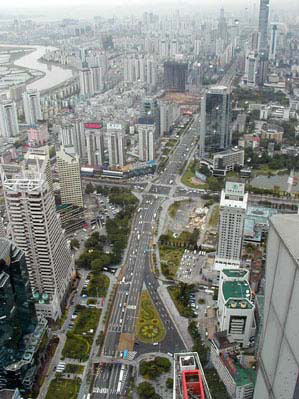
As a result of a combination of rapid economic growth and industrialization and an ambitious socio-economic development plan through 2020, the rate of urbanization is expected to increase from the current 39 percent to 55 percent.
This means that at least15 million farmers and other rural residents are expected to migrate into Chinese cities every year from now until 2020.
The combination of China’s limited land resources (China relies on farmland that is just 7 percent of the world total to support its population that accounts for 20 percent of the world total) and rapid development means that the Chinese will face the most difficult urban and land policy challenges in the world.
Accompanying this trend toward massive urbanization will be enormous challenges in many related areas: housing and real estate development, land management, land economics and taxation, public financing and planning.
These challenges, however, also provide plentiful and unique opportunities for scholars and policy makers to have a positive impact.
To confront these challenges, China has already initiated a series of fundamental and revolutionary urban and land policy reforms.
This is manifested in the passing of laws and regulations such as: “The Amendment of the Chinese Constitution?(1988), “The Provisional Regulation of Land Use Rights Granting and Transferring of State Owned Land in Cities and Towns?(1991), “The Urban Planning Law?(1994), and “The New Land Administration Law?(1999), among others.
These reforms are intended to regulate and manage urban development, land use and land allocation through both law and the introduction of market principles.
This fundamental transformation of Chinese society, driven largely by gradual reform, makes China the country in which scholars can be especially influential through their research, training, and other engagements.